The brief
The Department of Industry, Science and Resources leads national initiatives in innovation, energy, climate, technology and science. Over time its digital presence had expanded into a network of websites, sub-brands and portfolio agencies, each with its own navigation structures, design patterns and content types. Users met inconsistent layouts and dense information pathways when looking for policy, support programs or services, and content owners struggled to maintain accessibility and consistency across entities with unique requirements.
The challenge was clear: create a unified, accessible and scalable digital framework supporting more than 18 government entities (including CSIRO, IP Australia, Geoscience Australia and the Australian Space Agency) without erasing individual brand identity.
What we did
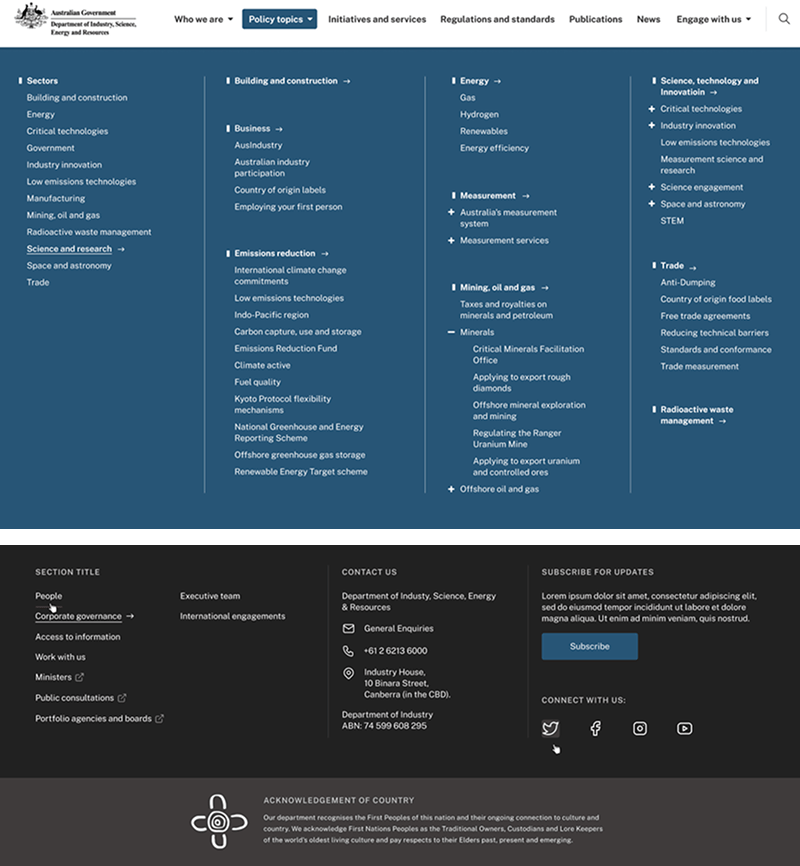
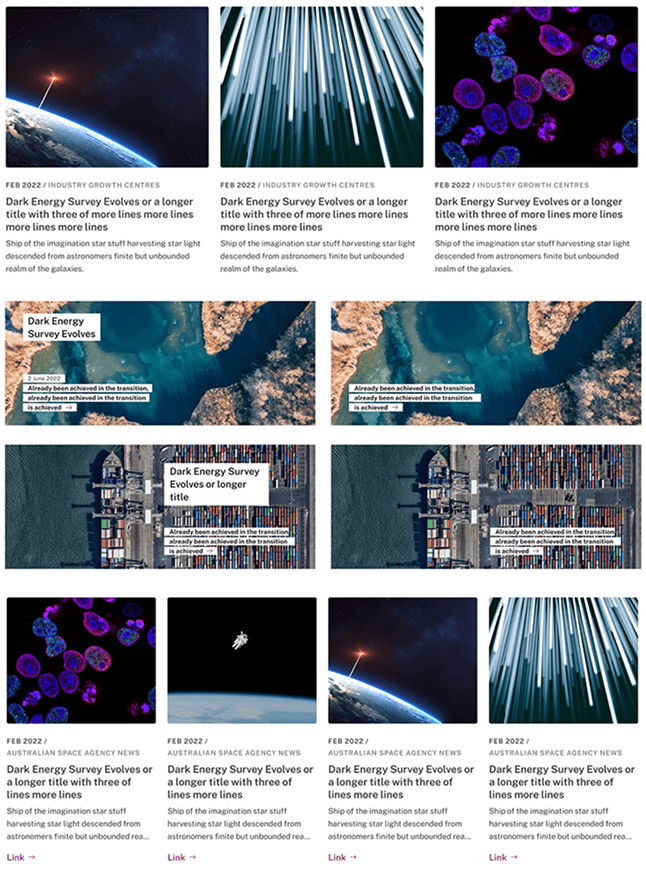
Working in collaboration with Tank's content strategy and development teams, we interrogated the existing information architecture to simplify complex content structures and reduce duplication. Using atomic design principles, we helped develop a universal design system of reusable components, templates and page patterns, consistent by default, with room for each entity to express its purpose.
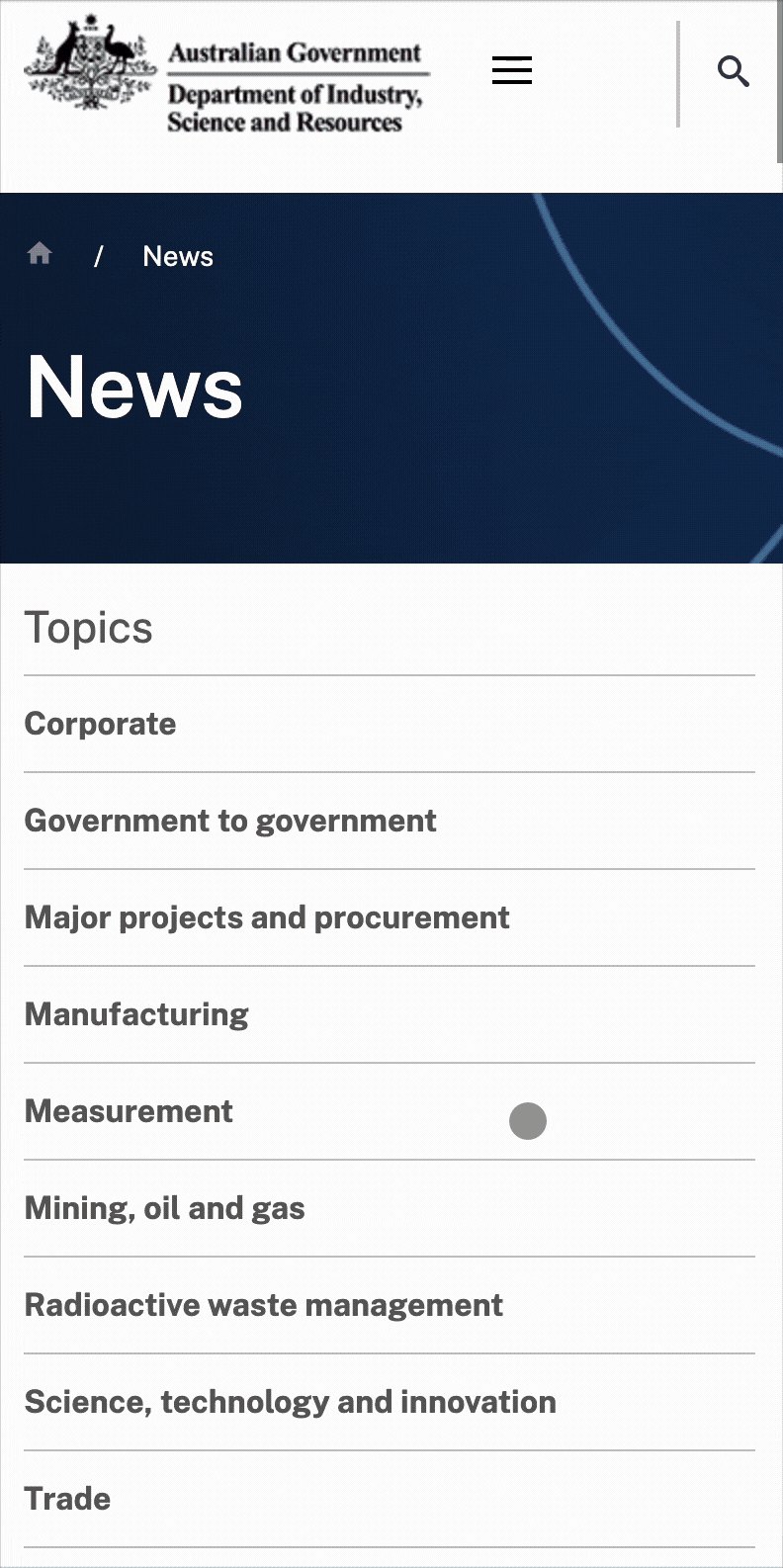
Mobile-first layouts prioritised readability and wayfinding across hundreds of content types, while search and filtering tools helped users move quickly through dense documentation. Every component aligned to WCAG accessibility requirements and the Australian Government Digital Style Guide, and stakeholder workshops kept brand ownership, technical feasibility and the behaviour of citizens online in balance throughout.
The outcome
The design system now provides a shared visual language and interaction model for every agency within the department. Navigation, hierarchy and component behaviour scale predictably across entities, reducing friction for citizens and internal teams alike.
A purpose-built style guide documents UI patterns, typography rules and component behaviour, supporting developers with implementation at the most granular level. The work established a strong foundation for future government projects, making complex services more transparent, accessible and easier to navigate, and improving public trust along the way.